
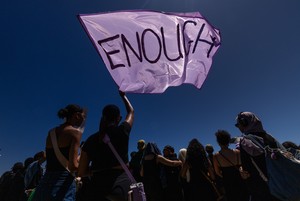
Black Sash stands with women of South Africa who live in fear for their lives on a daily basis.
Black Sash stands with women who have been made afraid to go to the Post Office.
Black Sash stands with women who cannot take a jog on their own.
Black Sash stands with women who have to walk in unlit and unsafe streets to get home.
Black Sash stands with women who carry the burden of unpaid care-work.
Black Sash stands with women who are unemployed, informal workers, or financially insecure and subject to financial abuse.
Black Sash stands in solidarity with the families of the women killed in and around Ekurhuleni, and with all women who now fear leaving their homes to walk, run, work or care for their families.
We welcome the deployment of specialised police teams and increased patrols, but more can and must be done. Black Sash believes that making human rights real includes the right to safety and security in public spaces.
We reject empty calls for women to “be careful” and instead call on the state to commit sufficient human and financial resources to prevent and respond to gender-based violence and femicide.
We call on the City of Ekurhuleni and other municipalities to:
- Audit and repair street lighting in areas where women walk, run and commute;
- Prioritise road and sidewalk upgrades that improve visibility and access;
- Publish clear, ward-level safety plans with community input; and
- Ensure residents can easily report faults and receive time-bound responses.
Beyond municipal action, we call for a comprehensive response to gender-based violence and femicide that includes:
- Ensuring financial security through a Universal Basic Income Grant;
- Functioning street lighting and safe public infrastructure;
- Proper funding of women’s and children’s shelters and support services;
- Recognition and reduction of women’s unpaid care work;
- Visible, responsive and accountable policing; and
- A government that treats women’s safety as a core public service.
Civic education must empower communities to claim these basics. If women cannot move freely without fear, our democracy remains unrealised.