
Women’s economic power is inseparable from care work, social protection, and the ability to make real choices about work and survival. Under the Women’s Month theme “Empowered Women, Empowered Nations,” social grants matter because they help women carry care responsibilities with dignity, while creating the conditions to participate in paid work and household stability.
Every day across South Africa, women carry the work that keeps households and communities going. They prepare meals, care for children, support older relatives, look after sick family members and hold together the daily routines that allow others to leave home and earn an income and/or receive an education. Much of this labour is unpaid, invisible in formal economic measures, and still treated as private rather than essential.
But care work is not separate from the economy. It is part of the system that makes the rest of the economy possible. When women carry the weight of care without support, their choices about work, income and mobility become constrained. When they receive social protection, those choices expand.
A social grant can cover transport to a job interview, buy food when income is not enough, pay for a child’s basic needs or help a family get through a crisis without falling deeper into debt. In that way, social grants do not remove the need for care work, but support the people doing that care, and make it more possible to carry on without pushing women further into poverty.
This matters in a country where women continue to absorb a disproportionate share of unpaid care responsibilities, often alongside low wages, unemployment or insecure work. It also matters because social grants remain one of the most direct ways the state reaches households where poverty is most severe. For women, that support can mean the difference between staying trapped in survival mode and being able to make a practical choice about work, care and dignity.
Social Protection and Dignity
Black Sash has long argued that social protection must be understood as a right, not a favour or charity. This is why the organisation’s work on a Social Protection Floor is so important. South Africa already has a relatively extensive social assistance system, but it still falls short of addressing the scale of structural poverty, unemployment and inequality. Millions of unemployed adults remain outside meaningful income support, and current policy often treats poverty as a series of temporary crises rather than a system that needs to be changed.
A Social Protection Floor offers a different approach. It sets basic guarantees that ensure people can access essential health care and basic income security, together with the services needed to live with dignity. In practical terms, that means defining the minimum conditions people need in order to survive and participate in society, rather than leaving survival to chance.
Black Sash has been advancing this work in partnership with the National Planning Commission, the International Labour Organization, and civil society partners. In March 2025, the organisation convened stakeholders from government, academia and civil society to review a Social Protection Floor concept note for South Africa. The process has continued through additional workshops, including one held in August 2026, where consultation broadened the framework to include nutrition, health, basic income, basic services, education, transport and housing as essential elements of a meaningful floor.
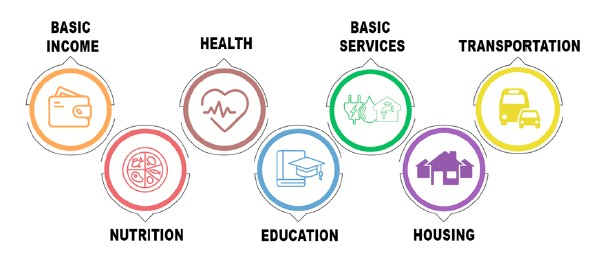
This broader approach reflects the reality of women’s lives. Income alone is not enough if people cannot get to work, access health care, feed their families or find safe and affordable housing. Care work is shaped by all of these conditions, which is why social protection must be understood as a system, not a single payment.
Empowering women, strengthening nations
Our 2026 Women’s Month theme, “Empowered Women, Empower Nations,” speaks directly to this reality. Women’s empowerment is not only about representation or leadership, important as those are. It is also about whether women have the material support to live, care and work on their own terms.
If women are expected to carry the care burden that sustains households and communities, then public policy must recognise that burden and respond to it. Social grants are one of the clearest ways to do this. It will not solve every problem, but it can and does provide a measure of stability in a context where many households live close to the edge.
This stability has ripple effects: It supports children, older persons, helps women keep households functioning and creates a base from which women can participate more fully in the economy and in public life.
If “Empowered Women, Empowered Nations” is to mean more than a slogan, it must include social protection that recognises care work as essential, not incidental. It must include policy that gives women room to choose, room to survive and room to build lives with dignity.
For more on Black Sash’s Social Protection Floor work, read the first report from the March 2025 convening here. For paralegal advice on social assistance, social insurance, labour and consumer rights, contact the Black Sash Helpline on 072 663 3739 or 063 610 1865 via phone or WhatsApp, or email help@blacksash.org.za.